AI Engineering with Go
The Go AI course

AI Engineering
with Go

Who said AI had to be built in Python? Ship production AI systems in Go — LLM integration, vector databases, function calling, and autonomous agents you'll actually deploy.

View the curriculum →

5 modules · 43 lessons · 13+ hours · One-time purchase, all future bonus modules included

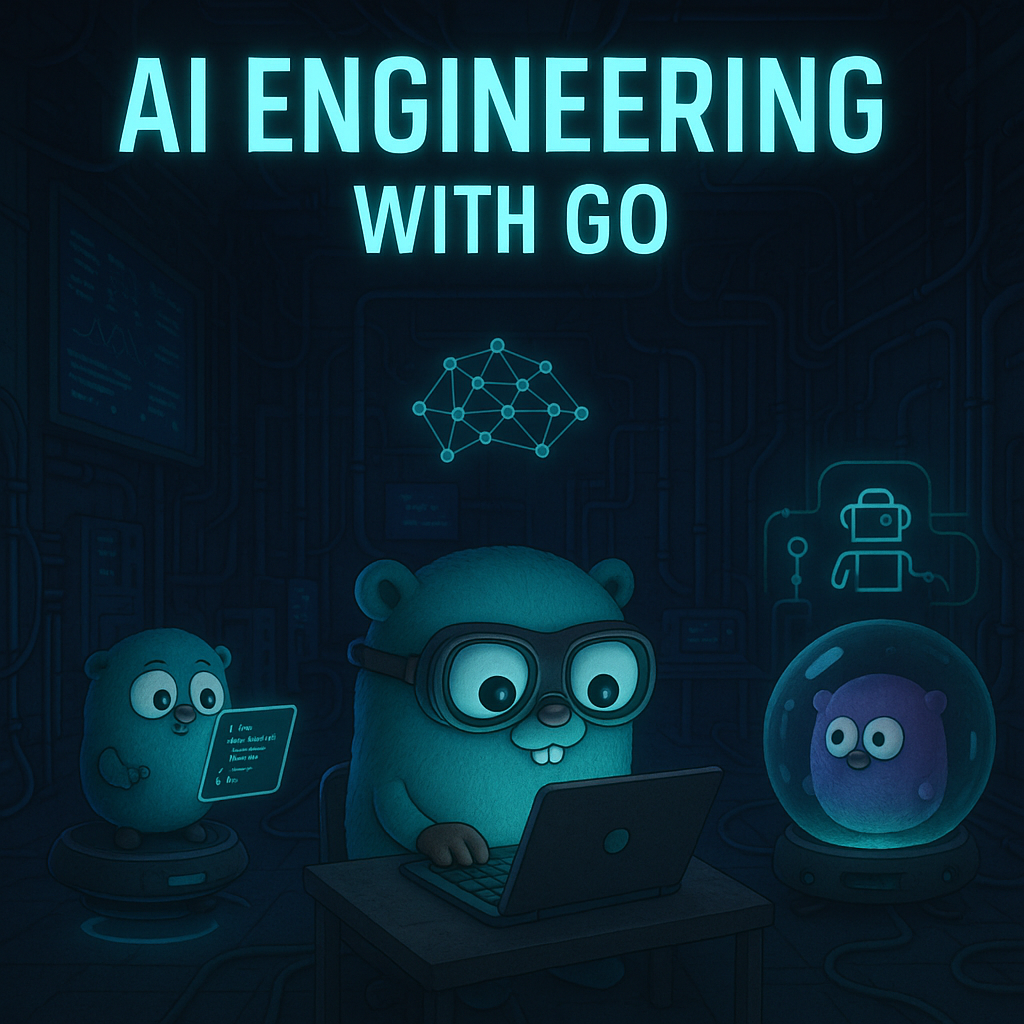
AI Engineering with Go course cover

See what you'll build

Curriculum

Five modules. Zero hand-waving.

Every module ends with something running in production — not a notebook. All 5 modules are available now, and future bonus modules are included with your purchase. Click a module to see its lessons.

Get the course — $99 →
01

Building your first production AI app

From your first LLM call to a deployed AI flashcard app — prompts, API scaffolding, frontend, and shipping to production.

14
  • Project Overview
  • Setting Up Your Development Environment
  • Initializing Project From Template and Deploying
  • Introducing the Project and Building Basic Flashcards App
  • Making the First LLM Call
  • Adding AI to Our Project
  • Scaffolding our API to make LLM Calls
  • Improving our Prompts
  • Building the Frontend
  • Deploying the Frontend
  • Ingesting Real Notes
  • Polishing the Project
  • Wrap Up and Challenges
  • BONUS: LLM Streaming
02

Function Calling — Structured LLM Actions

Give models the ability to act: define and register functions, validate outputs, and build predictable turn-based AI interactions.

6
  • Project Overview
  • Function Calling Intro
  • Using Function Calls in Projects Part 1
  • Using Function Calls in Projects Part 2
  • Implementing the Frontend
  • Adding Polish
03

Using Vector Databases

Embeddings, semantic search, and retrieval — build a context-aware quiz API backed by a vector database, deployed to production.

9
  • Project Intro
  • Introduction to Vector DBs
  • Vector DB Example and Demo
  • Vector DB Crash Course
  • Quiz v2 - API Scaffold
  • Index Notes
  • Implementing Our New Quiz API
  • Frontend and Polish
  • Deploying to Production
04

Building AI Agents

Build a tool-using agent, integrate it into your app, refine its prompts, and deploy it to production.

9
  • Project Overview
  • AI Agents Overview
  • Let's build an AI agent
  • Integrating an AI agent into our app
  • Implementing the frontend
  • Refining our agent prompt + intro to tools
  • Building tools
  • Polish
  • Deploying to production
05

Model Context Protocol

How MCP works, MCP servers in practice, and building and integrating your own MCP servers — plus best practices.

5
  • How Does MCP work?
  • MCP servers in practise
  • Building MCP servers
  • Integrating MCP servers in your app
  • MCP best practises
++

Bonus modules coming soon

Advanced topics like observability, fine-tuning, and guardrails will be added regularly — all included with your purchase.

lessons per module

Hands-on projects

You'll deploy real AI systems — not notebooks.

P1

An AI flashcard quizzer

A production AI app that turns real notes into quizzes — your first LLM integration, deployed with a frontend.

P2

A wizard-duel game

A turn-based AI game built on function calling — structured outputs, validation, and predictable model behaviour.

P3

A semantic quiz engine

Your quiz app, upgraded with embeddings and a vector database — context-aware answers over your own documents.

P4

An autonomous agent

A tool-using AI agent integrated into your app and deployed to production.

14-day money-back guarantee.

If the course isn't for you, email hello@bytesizego.com within 14 days for a refund.

Why Go for AI

The models speak HTTP. Go speaks it better than anything.

AI engineering in production is mostly systems engineering: streaming responses, concurrent pipelines, retries, back-pressure. That's Go's home turf — one static binary, no dependency hell, and concurrency primitives that make agent orchestration natural.

You'll learn how to practically integrate AI into real applications with Go — starting from basic LLM usage and gradually building toward dynamic, intelligent, autonomous AI agents. We focus on shipping real projects every module; building your portfolio as well as your skills.

Your instructor Preslav Mihaylov - AI Engineering Course Author

Preslav Mihaylov

Preslav is a Senior Product Engineer with a track record of being a technical lead on multiple product-oriented teams, building resilient distributed systems for both big tech and startups.

He has been a technical trainer since 2015, most recently as the lead trainer at Trading212 for their advanced software engineering bootcamp — uniquely qualified to teach developers how to build AI applications that actually work in the real world.

Questions, answered

Do I need machine learning experience?

No. This is a course for Go engineers, not ML researchers. You'll learn everything you need about how models behave from a systems perspective — the focus is building with them, not training them.

How much Go experience do I need?

We won't be teaching Go on this course, so it is assumed you at least know how to write a basic program. If you have written even a single Go program, this course is for you.

Which AI providers does the course use?

Lessons use the OpenAI and Claude APIs, and the patterns you'll learn are provider-agnostic — the abstractions you build make swapping providers straightforward.

Is this a one-time purchase?

Yes. Pay $99 once and the course is yours, including all 5 current modules and every future bonus module — no subscription.

I don't like the course, can I have my money back?

If you didn't finish the course and feel it is not up to scratch, drop us an e-mail at hello@bytesizego.com and we'll issue you a refund within 14 days.

Be the Go engineer who ships AI.

43 lessons, four deployed projects, all future bonus modules included. Ready when you are.

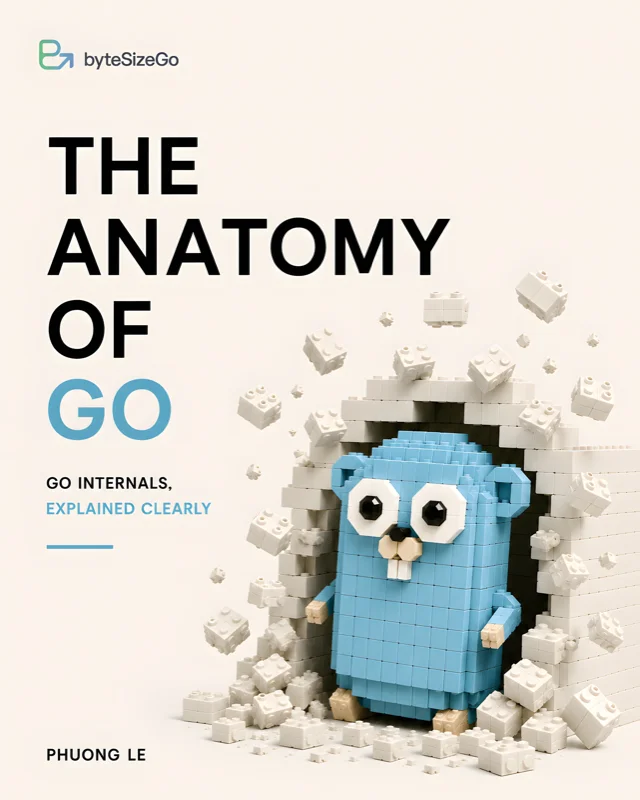
The Anatomy of Go book cover
Goes well with

The Anatomy of Go

The systems you'll build here run on Go's scheduler, memory model, and channels. This book explains all of it — nothing about Go left as magic.

Get the book — $45 →